

Hygiene plays a critical role in healthcare, directly impacting patient safety and the prevention of healthcare-associated infections. Hospital uniforms, while essential for professionalism and cleanliness, pose contamination risks if misused outside controlled environments. Pathogens can transfer via uniforms, threatening patients and staff alike.
The Importance of Hospital Uniforms
Uniforms help create a clear visual distinction between healthcare personnel and others, reinforcing trust and confidence among patients and visitors alike. When properly managed, these uniforms support infection control protocols by acting as barriers against contaminants.
However, mishandling hospital uniforms presents significant risks that can undermine these benefits. Wearing uniforms outside hospital premises or using them without proper laundering can transform them into vehicles for pathogen transmission. External contaminants acquired in public spaces can be brought into clinical areas, increasing the potential for healthcare-associated infections (HAIs).
To support this management, ScrubStations has developed advanced RFID-enabled uniform vending machines. These automated systems enhance hygiene and safety by facilitating real-time inventory tracking, ensuring clean uniforms are always available, and minimizing human contact with garments during distribution.
RFID Technology: A Game Changer
RFID technology revolutionizes healthcare hygiene by using real-time inventory tracking of hospital uniforms, a critical component in preventing contamination. ScrubStations’ RFID-enabled uniform management solutions allow facilities to monitor each garment’s status instantly, ensuring only sanitized uniforms are in use.
Automated dispensing systems integrate RFID tags to streamline uniform distribution. Staff select their size, and the machine dispenses the correct uniform automatically, reducing human contact with bulk inventory and minimizing contamination risks. This customization also enhances comfort and compliance by providing properly fitting uniforms tailored to each user.
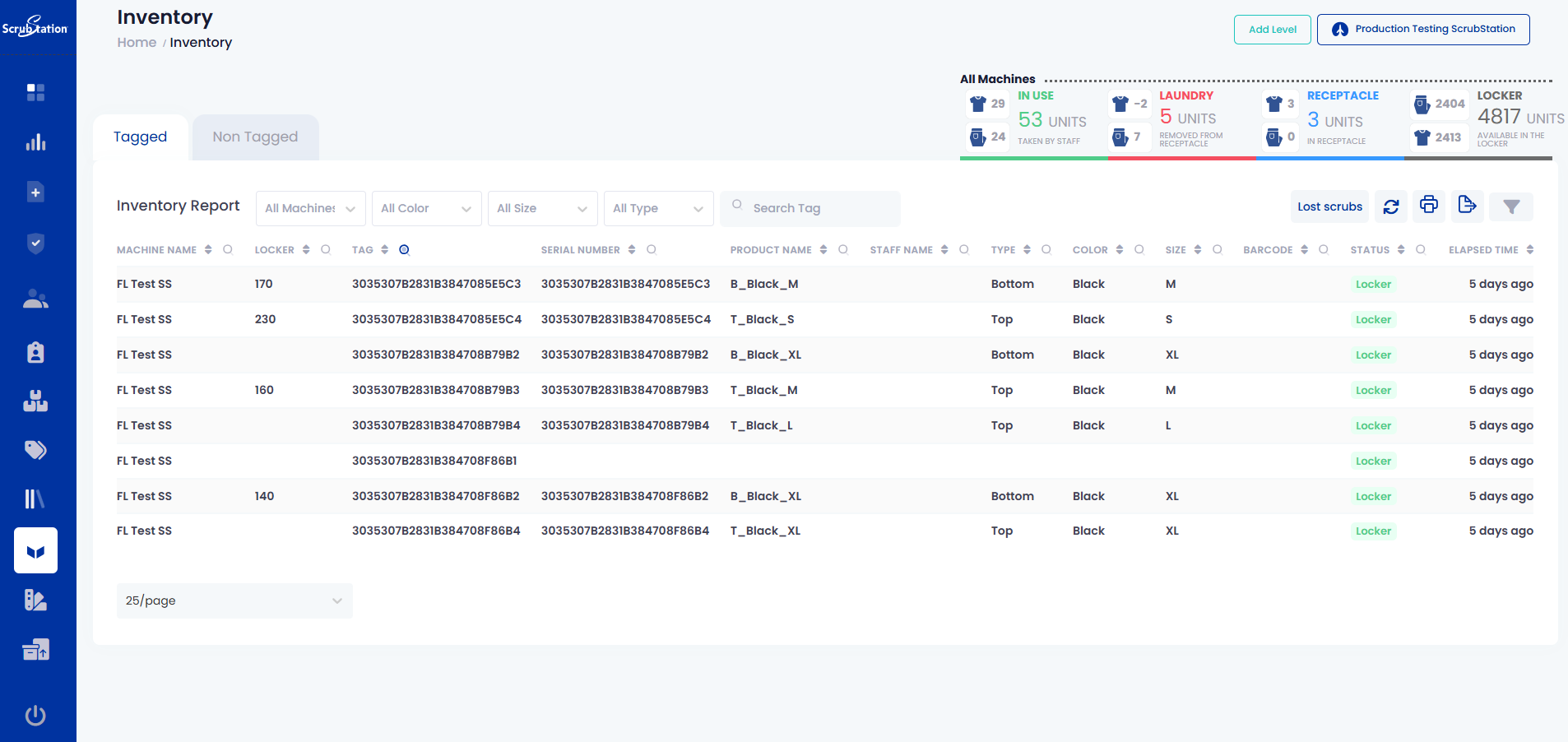
Beyond distribution, RFID supports robust accountability and reporting. Healthcare managers receive detailed usage data, including how many uniforms are dispensed, laundered, or pending. This traceability helps maintain strict hygiene standards, identify gaps in supply chain management, and optimize stock levels, preventing shortages or excesses.
Contamination Risks and Proper Usage Guidelines
Hospital uniforms play a crucial role in maintaining hygiene and professionalism, but they can also become vectors of contamination if mishandled. One significant risk is pathogen transfer, where pathogens picked up from one patient or contaminated surface can easily transfer to another patient or healthcare worker.
When hospital staff wear uniforms outside the healthcare setting, they can introduce environmental contaminants such as dirt, bacteria, and viruses into sterile areas. This risk, though somewhat lower than direct pathogen transfer, still affects about 65% of contamination cases linked to uniform misuse.
Secure storage is another critical practice. Uniforms must be kept in designated, contamination-free areas such as RFID-controlled lockers that ensure only authorized personnel access clean attire. ScrubStations‘ RFID solutions excel here by providing controlled storage with automated access logs, minimizing contamination risks.
In high-risk environments, wearing additional Personal Protective Equipment (PPE) over hospital uniforms further reduces direct exposure to pathogens. This layering is particularly vital in infectious disease wards or during procedures with elevated contamination potential.
Frequently Asked Questions
What are the key contamination risks associated with hospital uniforms?
▼
How does RFID technology improve hygiene in healthcare settings?
▼
What guidelines should healthcare staff follow regarding hospital uniforms?
▼
Conclusion
Leveraging RFID-enabled uniform vending machines revolutionizes uniform management by automating inventory control, ensuring proper sizing, and minimizing direct handling technology provides greater accountability and reduces contamination, supporting safer healthcare environments.
🎯 Key Takeaways: Enhancing Hygiene and Safety with RFID
- Strict hospital uniform guidelines are essential for preventing contamination.
- RFID-enabled uniform vending machines automate inventory and reduce contamination risks.
- ScrubStation leads in innovative hygiene solutions for healthcare facilities.